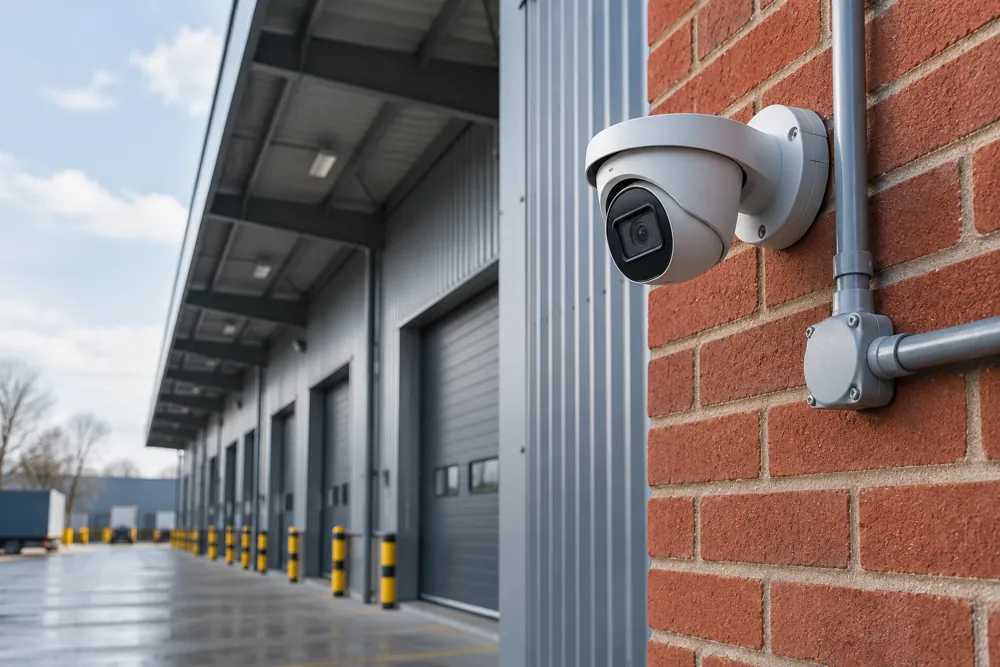
Cameras With A Defined Job
A useful CCTV system starts with a question: what must this camera show? Recognising a visitor at a reception door needs a different view from watching movement across a loading yard. We plan commercial CCTV around the decisions you may need to make after an incident, rather than fitting the same lens everywhere.
For a warehouse, that can mean separate views of the vehicle entrance, loading doors and internal stock routes. An office may need clearer coverage of reception and shared circulation spaces. Schools need careful consideration of safeguarding, privacy and who can access recordings, with the responsible staff involved before the design is agreed.
A survey should identify blind spots, existing lighting, reflective surfaces and obstructions such as open roller shutters. Camera height matters too: a wide view from a high position may show activity without recording enough facial detail at an entrance. Ask for the intended purpose of each view to be written into the proposal.
The Installation Process
The first stage is a site review with your facilities or security contact. Share a simple plan, the incidents you want to address and any insurer requirements. Existing cabling and recorders can be assessed, but their condition and compatibility need checking before they become part of a new system.
Next comes the layout and equipment specification. This should describe camera positions, lens choices, recording arrangements, power, network connections and access permissions. Where cameras depend on your business network, your IT team should approve addressing, bandwidth use and remote access before installation begins.
During installation, cable routes need to suit the building fabric and the working environment. Access to high positions, busy loading areas and restricted rooms should be scheduled with the premises manager. The final stage is commissioning: check every view, playback, timestamps, export and authorised remote access, then hand over the operating instructions.
Data Protection And Image Quality
CCTV recording identifiable people is subject to UK GDPR and the Data Protection Act 2018. Your organisation needs a documented purpose and lawful basis, appropriate signage, controlled access and a justified retention period. GOV.UK explains the rules for CCTV at commercial premises, including requests for recorded images.
The BS EN 62676 series addresses video surveillance for security applications. A specification should identify the relevant current parts and the required operational result. Ask the installer how the proposed image detail will be checked at each target position, rather than treating camera resolution as proof of performance.
Night-time conditions deserve their own assessment. Vehicle headlights, dark clothing, floodlighting and infrared reflections can change what is visible. Where practical, include low-light checks in acceptance testing and record any limitations that cannot be resolved with the agreed lighting and camera positions.
What Affects CCTV Installation Cost?
Camera count is only one part of the cost. Lens requirements, recorder capacity, retention settings, existing network infrastructure and difficult cable routes can all change the specification. Work at height or out-of-hours access may also affect labour and equipment requirements.
Ask for installation, licences, storage, maintenance and optional monitoring to be separated in the quotation. A lower initial equipment cost can leave a gap if the recorder cannot retain the required footage or export it in a usable format. Agree who owns administrator accounts and how licences can be transferred.
For an existing system, list the cameras that need replacing and the problems that prompted the enquiry. If poor playback or unreliable recording is the main issue, CCTV maintenance and fault finding may help establish whether targeted repairs are more appropriate than complete replacement.
Your Questions Answered
How Long Should Business CCTV Keep Footage?
Business CCTV retention should follow a documented need, rather than an automatic fixed period. Consider how soon incidents are normally reported and whether particular footage needs preserving for an investigation. Restrict access to saved clips and review the policy when the purpose, layout or risks at your premises change.
Can Existing CCTV Cameras Be Reused?
Existing CCTV cameras can sometimes be reused if their condition, image quality and compatibility are suitable. The survey should check cabling, power, recorder support and software security before reuse is agreed. Ask for any limitations to be recorded, especially where older equipment may restrict playback, remote viewing or future expansion.